


Beyond Deliverables: How IDEALIST Helps Better Map the Ukrainian Industry 5.0 Ecosystem

Almost every application to European grant programs includes a separate section dedicated to the sustainability of the project’s results. We describe plans for disseminating results, utilizing them after funding ends, engaging new users, developing partnerships, and scaling up the project. Donors quite rightly expect that the tools, methodologies, and knowledge developed within the project will continue to be used after the grant ends.
In practice, however, we have all repeatedly observed a different reality. Most projects successfully fulfill their formal obligations. Work packages are completed, deliverables are prepared, training programs are conducted, digital platforms are created, and final reports are accepted by the donor. If we evaluate the project using classic project management criteria, everything looks exactly as planned.
But a year or two passes—and a significant portion of these results practically disappears from everyday practice. Project websites are no longer updated. The platforms that were created lose their active users. Methodologies remain as PDF files but are not integrated into actual services. Expert networks gradually fade away. And new consortia often start researching problems all over again that were already thoroughly addressed several years ago.
We have also encountered this repeatedly in our own work. One of the most telling examples is our attempt to apply the findings of the European ADMA project while implementing digital transformation initiatives in Ukraine’s light industry. Despite the high quality of the materials produced, a significant portion of the practical tools were already unavailable or unsupported, which significantly limited their potential for reuse. As for our clusters’ own projects, according to estimates by the UCA Executive Directorate, more than 70% lack sustainability.
We have observed a similar situation in recent years in dozens of projects related to Industry 4.0–5.0—their results are practically never used, or are completely unknown to members of our community. This problem of fragmentation and low sustainability can be loosely termed “grant islands.”
So, it’s worth asking ourselves a simple question:
Why do even high-quality European projects so rarely lead to lasting change?
The more we work with various international initiatives, the more we become convinced that the problem does not lie in the quality of the results themselves. On the contrary—most of them are professional, well-structured, and entirely suitable for practical use.
The problem lies elsewhere: We’ve become very good at producing project outcomes, but we pay far less attention to how these outcomes should become part of the ecosystem’s fabric once funding ends.
That is precisely why the IDEALIST project has become much more to us than just another European project. In fact, it is one of our most significant projects, where we are completely transforming our approach to sustainability. Instead of constantly monitoring deliverables, we began asking, “What will happen to these results after the project ends?”
Over the past year, the APPAU team has deliberately integrated select IDEALIST tools and approaches into the development of Ukraine’s Industry 5.0 ecosystem—specifically, into the practices of the UCA clusters and the new European Digital Innovation Hub (EDIH) Kyiv Hitech. We applied some of them almost unchanged. Others had to be significantly reimagined in light of Ukrainian realities—war, energy instability, a shortage of skilled workers, new business requirements, and the need for rapid digital transformation of industrial enterprises.
Accordingly, this article is not about the IDEALIST project itself. It is about how the results of a European project can be implemented as sustainable practices across entire industrial ecosystems.
The Context of the APPAU’s Inclusion in IDEALIST
Joining the IDEALIST project in 2023 marked APPAU’s first—and much-anticipated—engagement with Horizon Europe. After all, it was the second year of the war, and our team was in dire need of such partnerships. We would like to immediately express our gratitude to the French CIMES cluster, thanks to which this collaboration came about.
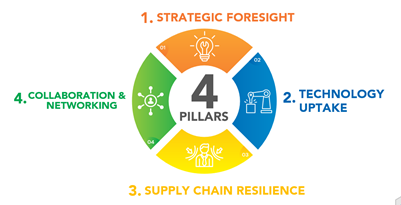
The project offers a whole range of tools and working formats across the four areas shown in Fig. 1, which have proven effective in European countries and are greatly needed in Ukrainian markets. These include strategic and technological foresight initiatives, specialized study tours to share experiences on the dual transition of SMEs, advanced hackathons and brokerage events (Hack&Match), programs for import substitution of critical materials, access to the AGORA platform (EIT Manufacturing), and more. All of this is aimed at three major market segments (Automotive and Mobility, Aerospace and Defense, and Energy-Intensive Industries) and involves strong inter-cluster collaboration among 13 participants from six EU countries.
However, the APPAU’s involvement in the project turned out to be more complicated than we had expected. Restrictions on overseas business trips for APPAU and SME leadership—our members—for which a budget had been allocated, immediately and sharply limited Ukrainian participation. And without in-person presence and exchanges, the overall effectiveness of cooperation drops dramatically. We also faced our own resource constraints, and it later became clear that, for our SMEs, exchanging expertise on innovative developments amid wartime conditions is no longer considered particularly valuable. Or, rather, it is very difficult to promote. So, there are many reasons for the low engagement of participants in our ecosystem, but to summarize—it comes down to a complex set of factors related to the wartime economy, with the shortage of qualified specialists for such innovation-development missions standing out as the primary issue.
IDEALIST as a Catalyst for Ecosystem Development
The situation began to change when we were able to attend the consortium meetings. In fact, starting in October 2025, the value of the tools offered by the project became even clearer, and since then we have been working tirelessly to adapt and implement them into the Ukrainian Industry 4.0–5.0 ecosystem and market.
So, we’re talking about:
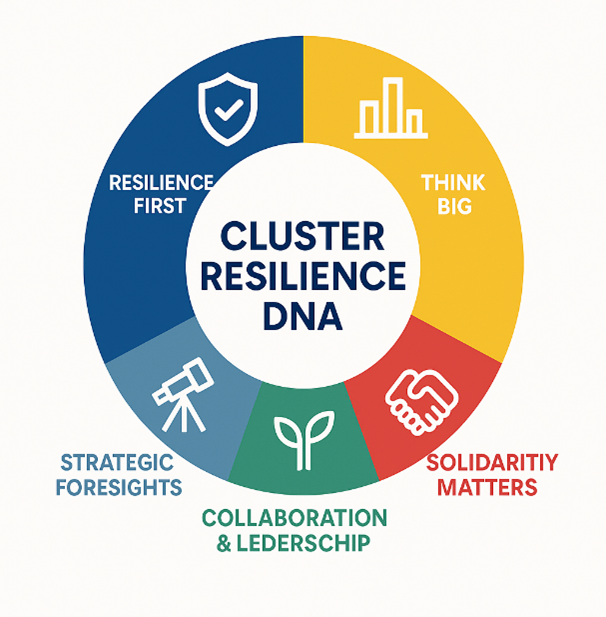
- The implementation of strategic foresight techniques into APPAU’s practices, which was a mandatory requirement of the project. However, in addition to doing its “homework,” APPAU proposed extending this practice to all clusters within the Ukrainian Cluster Alliance (UCA). By integrating this technique into the broader theme of resilience, in November the UCA presented its vision of “Resilience DNA” as part of the holistic “Shaping Resilient Future” concept.
Later, the UCA set the implementation of resilience practices as a goal for 2026, and the APPAU released its UA Automation Resilience Stack—a set of strategic directions where technologies and new models of collaboration can contribute to increasing the resilience of entire sectors—Fig. 2. This shift marks a change in the focus of foresight sessions. Factors that today determine the competitiveness of Ukrainian industry—such as energy security, labor shortages, supply chain resilience, and military risks—have been added to the traditional technological drivers. As a result, foresight becomes not only a tool for predicting technologies but also a tool for strategic resilience planning for all participants in our clusters.
2. Hack&Match—hackathons that are also matchmaking events, where the project first collects challenges on specific topics, and then solution providers step in. IDEALIST has hosted five such online events, and each one is of great value to APPAU participants—they provide a clear picture of the landscape of needs and solutions among European innovators. Here’s what we’ve done to adapt this tool to our ecosystem:
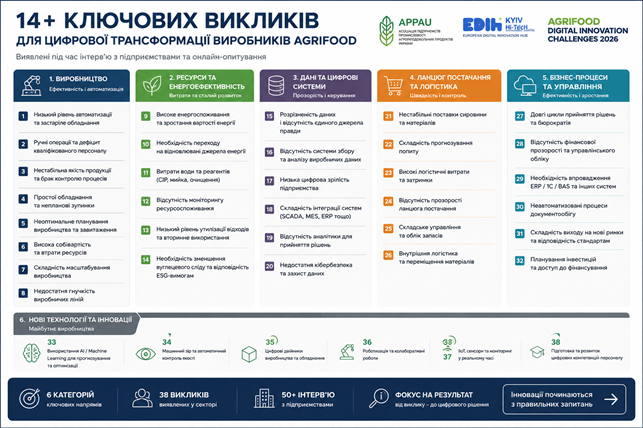
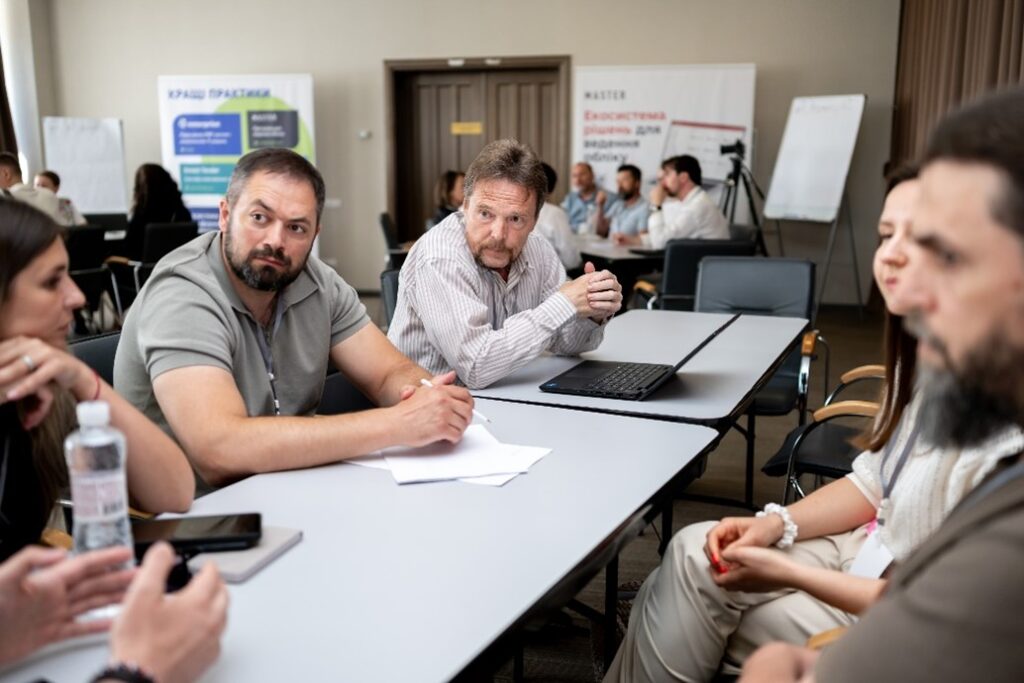
- Launching cross-sector and sector-specific Hack&Match events. The first cross-sector event took place in December 2025, and in July, two events (online and offline) were held in the Agrifood sector, attracting more than 30 companies from this industry and 12 APPAU integrators. Another distinguishing feature is the mandatory proposal for innovative fundraising, which makes them full-fledged brokerage events, now held within the framework of EDIH Kyiv Hitech. The “world café” format, introduced at the most recent Hack&Match—where small groups of clients rotate through standard topics presented by integrators (AI, MES/MOM, migration from 1C, robotization, and energy autonomy)—became the highlight of the event and was very well received by participants.
- The creation of business case portfolios, which APPAU has initiated as part of these activities, is becoming a tool for strategic and operational planning. Currently, 20 case studies have been created within the Agriifood sector, and another 14 across other industries. With several dozen case studies available (and the number growing constantly), this is extremely valuable content for market analysis and understanding.
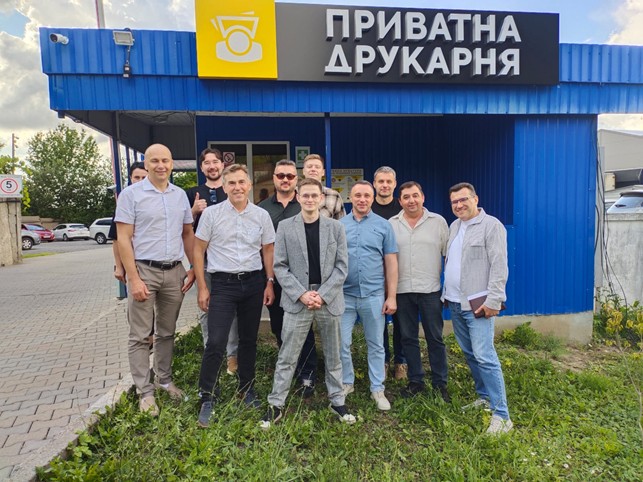
- Hack&Match’s new brokerage format: Enterprise.edition—corporate mini-hackathons that require 2–5 integrators with the most relevant proposals to visit one company. This new format—a well-moderated meeting with brainstorming elements centered on key corporate case studies—was well-received by all participants at the first meeting in Khmelnytskyi in July 2026. Since then, this format has become a standard service in EDIH’s digital transformation support program.
3. Together, these developments allow us to take our collaboration with experts from universities and other EDIH participants, as well as the UCA cluster community, to a new level. In particular, as part of the aforementioned program, key service providers at EDIH Kyiv Hitech are now facing the challenge of becoming much more actively involved in serving SMEs, with the following issues standing out:
- creating libraries of business and use cases, best practices,
- standard customer journeys (in digital transformation), and incorporating the full engagement cycle
- refining other elements of the service model—from various questionnaires to the creation of customized digital transformation roadmaps
- standardizing and unifying the most effective methods for regular market outreach and education (workshops, white papers, webinars)
Thus, in this evolution, we see how the European project not only inspires or provides new ideas, but also genuinely stimulates and shapes new practices among Ukrainian organizations. It is important to note, however, that we did not use almost any of the key tools in the form in which they were presented in the project. Instead, each of them became a starting point for creating new services, processes, or work formats that today form the foundation of EDIH Kyiv Hitech’s activities and the UCA’s ecosystem of innovation clusters.
In this sense, IDEALIST has truly served as a catalyst for the processes we had already begun to launch EDIH. This evolution and the transfer of European tools into Ukrainian ecosystems, in our view, is the most important outcome of the APPAU’s participation in IDEALIST.
The broader context: optimizing tools and processes in innovation ecosystems
The intensive adaptation of IDEALIST’s tools to Ukrainian realities is not a spontaneous reaction by the APPAU leadership to the project’s requirements, nor is it simply taking advantage of the opportunity (at long last) to travel abroad—which certainly spurred all these processes. Nor is it a mere coincidence that it coincided with the launch of EDIH KyivHiTech, although that was also a motivating factor.
However, the most powerful driver is the deliberate sustainability strategy adopted by the APPAU and UCA in December 2025. In rethinking all the causes of “grant islands” and low sustainability, we developed the ED-APM (Ecosystem-driven Agile Project Management) methodology and playbook, which proposes systemic changes in project management to ensure project sustainability. A full description of this methodology is beyond the scope of this article, but let’s focus on just one element—the outcomes backlog. The methodology proposes a deliberate focus on and tracking of progress from deliverables to outcomes, starting literally from the first months of the project. This radically changes management approaches—you don’t just report on your KPIs and deliverables to the donor, but rather on what will remain after the project and how it will continue to function. In the example of the IDEALIST → EDIH Kyiv HiTech transition, we see how tools like Hack&Match, libraries of business and use cases, strategic foresight exercises, and more are being adopted by a large community and beginning to evolve into established practices.
By applying this context to other international projects we are familiar with—those taking place in the field of Industry 4.0–5.0 in Ukraine—many ideas may emerge regarding potential collaboration and the transfer of tools and practices, as well as their evolution and refinement. Without mentioning specific projects—and rather by posing open-ended and strategically “pressing” questions—let us identify:
- Advocacy and changes in regulatory policies: There has been a lack of progress in government policies regarding the development of Industry 4.0–5.0, which has resulted in a whole series of critical consequences
- Integration of project results into long-term development programs and frameworks: Given that we are already observing significant fragmentation across virtually all areas, the issue of integrating the tools and practices developed (which certainly exist within the projects) into long-term programs comes to the forefront. For example, this is what we did with foresight techniques, scaling them up to the level of the entire UCA.
- Creating sector-specific roadmaps for the dual transition: this could be one such integration tool. We have our own experience (GDT Textile), but without external support, it is extremely difficult to scale such initiatives.
- Integration of innovation clusters and EDIHs in regional development: APPAU (and subsequently UCA) has long maintained that innovation clusters and EDIH networks are two key institutions in the development of innovative sectoral and regional ecosystems. However, we currently have very little practical experience with such integration.
- Living labs in any areas or formats related to Industry 4.0–5.0—for example, launching a digital transformation program for a group of specific companies. This is what EDIH Kyiv Hitech is initiating as this publication goes to press. There are many unanswered questions about how to do this optimally given a number of serious constraints.
- Transforming university teams into service-oriented structures: this is one of the most complex issues that has been on our agenda for over 10 years, and resolving it is now critical to the success of EDIH Kyiv Hitech.
Sharing experiences on these issues, exploring the use of tools and practices already developed in Ukraine and the EU, and adapting and scaling up these tools through the channels available to us are matters of ongoing interest to the UCA leadership. We look forward to collaborating with all potential partners.
Interim Findings and Lessons Learned
The IDEALIST project is still ongoing, and we still have a lot to learn and adopt. The final results will be available in November. However—and within the proposed context of focusing on outcomes as the primary method for countering fragmentation and “grant islands”—certain lessons are already evident.
Lesson 1. The outcomes backlog and shifting the focus from deliverables to outcomes—it really works. This is one of the key elements of the ED-APM methodology, and we are now applying these practices to all UCA projects.
Lesson 2. Ecosystem thinking, which is inherent to clusters, is essential for virtually all projects—not only within our community but also throughout our broader environment. It is precisely this way of thinking that helps us identify commonalities across different projects, pinpoint the most important tools, and begin to unify and scale them within clusters and other communities. Our other playbook, “Operational Model of a Cluster Organization,” clearly identifies this as an essential component at the level of cluster structure. In the IDEALIST → EDIH Kyiv Hitech transition, this manifests itself in the broader context of identifying and applying the right tools for developing innovative ecosystems.
Lesson 3. The valuable outcomes of international projects (as IDEALIST clearly demonstrates) are not so much the tools themselves as the strengthening of what we refer to in the aforementioned cluster model as the “capabilities architecture.” We’re talking about balancing and improving a set of capabilities—among which, in the case of IDEALIST, we’re focusing on scaling tools. In other words, specific collaboration mechanisms—such as Hack&Match and foresight techniques—that were in their infancy in EDIH or previous APPAU initiatives have enabled us to scale up and amplify these capabilities significantly. To sum up—if the deliverables of one project significantly strengthen the capabilities of an entire ecosystem—that’s truly awesome.
Lesson 4. Adaptation creates more value than copying. Not a single IDEALIST tool was implemented in Ukraine verbatim. Virtually every one was modified, expanded, and adapted. In other words, project results don’t have to end with deliverables—but only if you begin their local evolution while the project is still underway.
Lesson 5. Clusters are one of the best environments for scaling. The tools developed in IDEALIST were created by European clusters. And in our experience, these are among the most powerful tools we’ve seen in our field. APPAU and UCA are also cluster structures that quickly facilitate adaptation and scaling. So, the lesson is simple: if you want something to work, become established as best practice, and then scale up—turn to clusters.
In closing, we would like to thank all our European partners, thanks to whom we—in our own environment and under these challenging conditions—are able not only to stand our ground and support Ukrainian business but also to continue developing.
Oleksandr Yurchak, CEO of UCA